Tuesday, November 22, 2011

Environmental Education

In our studies of the environment, we have researched a variety of topics that provide a vast amount of knowledge about the different facets involved in environmentalism. However, until now, we have not discussed how these principles should be taught. Environmental education is the term used to reference the teaching efforts of those who demonstrate and lecture on how natural environments develop and function and how humans can manage their behaviors in these ecosystems to live sustainably. 


Environmental education (EE)
EE can be used from primary schools to post-secondary institutions but is also utilized to teach the public through printed materials, media campaigns, websites, social media, and other outlets. The goal of EE is to broaden the knowledge and awareness about the environment and related obstacles, to develop the necessary skills to protect it, and manifest attitudes and motivations that produce well-informed decisions and responsible actions from the people affected. 


The main focuses of EE are:
  • Raising awareness about the environment and its challenges
  • Acknowledging and understanding these issues
  • Concerned attitudes that help preserve environmental quality
  • Fostering the skills necessary to protect the environment and address challenges
  • Participation in further discussion on the environment's challenges and in environmental programs
Jean-Jacques Rousseau and Louis Agassiz are known as the two main scholars who pushed emphasis on the study of nature and the environment and "not books." These principles laid down the foundation of EE as "nature study" in the nineteenth and twentieth centuries. Nature study uses stories and moral lessons to help students harbor an appreciation for the environment. Conservation education, which was developed after the Great Depression and Dust Bowl, focused on intense scientific training, looking at our environment through the scientific lens to solve challenges. As more people continued to fear the after-effects of air pollution, radiation, waste, and chemical pesticides, the environmentalism movement was born, and the push for EE came at its hardest.

The Development of EE
After the first Earth Day, April 22, 1970, which is used as a national day of environmental education in the schools, the United States government paved the way for environmentalism in the curriculum. President Richard Nixon passed the National Environmental Education Act to incorporate EE into K-12 schools, but in 1971, the North American Association for Environmental Education was created to promote EE in schools by providing resources to teachers. 

The United Nationals Education Scientific and Cultural Organization (UNESCO) and the United Nations Environment Program (UNEP) created three guiding declarations for EE:

1) Stockholm Declaration: Declaration of the United Nations Conference on the Human Environment... "to inspire and guide the peoples of the world in the preservation and enhancement of the human environment."
2) Belgrade Charter: International Workshop on Environmental Education... added goals, objectives, and guiding viewpoints of EE programs and defined the audience for EE, which includes the public.
3) Tbilisi Declaration: stated the importance of EE in the preservation and improvement of the environment and the conservation of its natural resources in the sustainable development of the world's communities 


Ways to Go Green
An important thing to remember when promoting EE is informing the public that going green does NOT have to be a difficult transition and can even be a fun, healthy alternative. One way this can be done is by "greening" your schools, especially in transportation. That way, we have expanded the green message outside of the classroom and into our daily routines. Well-developed school transportation plans can assist in decreasing our emissions, costs, and impact on the environment. Developing shorter, fuel-efficient routes for buses, clustering students near the school they attend, carpooling, walking, and biking are all methods of sustainably transporting children to and from schools. Biking and walking even promote healthier lifestyles and discourages childhood obesity!

For other ways to go green, read Our Earth's Green Tips.

Environmental Impact:
Promoting EE is the first step in ensuring we instill a safe, healthy, and green experience for students and the public as soon as they step outside of their houses. If we are expected to maintain our environment for future generations, the first step is to change our habits and move towards more sustainable practices.

Sources:

Tuesday, November 15, 2011

Environmental Ethics

Ethics is a huge topic of debate when dealing with environmental issues. What is best for the environment is not always best for the people or the economy and vice versa. Environmental ethics is a component of environmental philosophy which extends the boundaries of ethics to the non-human world and includes disciplines like law, sociology, theology, geology, and geography.


Background
Environmental ethics asks a variety of questions such as whether we should continue to reproduce at the current rate, whether we should cut down trees for consumption, and what environmental responsibilities do we have for the lives of future generations? After Rachel Carson researched the environmental and conservation effects pesticides had, numerous people started studying these philosophical questions concerning the environment and what was best for mankind and the world. The first Earth Day in 1970 really advanced the role environmental values had in the minds of Americans and those all around the globe.


Three Categories of Environmental Ethics
Alan Marshall and Michael Smith were two scholars who developed these groupings concerning the ethical approaches to environmentalism. 


Libertarian Extension- a civil liberty approach where equal rights and protections are extended to everyone in the community; in this environmental approach, these rights are inclusive of non-humans: flora and fauna (the political approach)
Ecological Extension- places emphasis on recognizing the fundamental interdependence of all biological and abiological entities and their vital diversity; ecosystems and the global environmental are intrinsically valuable (scientific approach- deep ecology) 
Conservation Ethics- focuses only on the environmental for its value or usefulness to humans; based on the belief that conservation is necessary because it has worth, a hand in the survival and welfare of the human species (shallow ecology)


In the Christian World
Christians believe God created the universe, and mankind is accountable to God to preserve our planet for the use of the resources entrusted to us. This shows us that we have value in the eyes of God to maintain this gift He presented us. This applies both in caring for people and environmental considerations like environmental health. The love of Christ is the ultimate motivation in dealing with sin, which is inherent in selfishness and thoughtlessness. Numerous countries portray this relationship of accountability at harvest thanksgiving.


Environmental Impact
Without thinking about all the pieces in the puzzle, we are unable to piece together an ideal picture. When dealing with environmental ethics, we must take a stand, whether we believe in saving the environment for human proliferation or to preserve the unique, biodiverse world we were given. If we take these questions into consideration, our world is not something that can be trashed relentlessly, and we must not sit idly by while others continue to do damage. 


Sources:
Stanford Encyclopedia of Philosophy
Environmental Ethics paper
Environmental Ethics journal
Internet Encyclopedia of Philosophy

Tuesday, November 1, 2011

How Race and Ethnicity Affect Attitudes Towards Environmental Issues

Is environmentalism a "white" phenomenon? When you look at the demographic of environmentalists, it is easy to think that minorities do not care about the environment as much as whites. However, the lines are not as clearly drawn as they may seem. It is very important to me that everyone, no matter what ethnicity, race, gender, creed, religion, or sexual orientation, get involved in environmental issues in their neighborhoods. As a Latina, I feel especially obligated to the Latino population of the United States in ensuring that the future will be brighter. This can only occur if all people realize the importance of sustainability and environmental protection and what it means for generations to come.


How True is This Claim?
Originally, civil rights groups believed that environmental concerns would lead people astray from their agenda. However, the realization was made that numerous environmental issues were  disproportionately located in areas with higher concentrations of the poor and minorities. Unfortunately, those facing socioeconomic inequalities are more likely to encounter environmental degradation, extreme weather events, and the resulting labor market dislocations.  After this was brought to light, civil rights groups saw that they could coexist with environmental organizations. Pollution and other environmental problems are no longer being seen as a "white" problem for they have reached minorities and impacted them fiercely.


Different environmental policies receive unique responses from ethnic groups. For example, in 2008, Americans supported funding research from renewable energy sources across the board. 91% of Americans favored the funding, breaking down into 85% approval from Hispanics, 95% from African-Americans, and 94% from all other ethnic groups. However, with only about 39% approval, African-Americans were less likely to strongly favor the funding. When it came to imploring electric utilities to produce at least 20% of their electricity from renewable sources, the same was seen from all ethnic groups surveyed. However, when it came to government subsidies for household energy efficiency improvements and establishing funding for energy-efficient buildings and educating Americans on energy use, Latinos were more probably to strongly favor the reforms, much more than any other group surveyed (39% Latinos/28% Other and 30% Latinos/26% Other respectively) though they would incur $2.50 to their monthly electric bills.


Latinos and the Environment
El costo de la vida sube otra vez. El peso que baja ya ni se ve,
Y las habichuelas, no se pueden comer, ni una libra de arroz, ni una cuarta de café.
A nadie le importa que piensa usted. Será porque aquí
No hablamos ingles
-- Juan Luis Guerra, 1996


Despite an austere economic recession the United States is undergoing, the vast majority of Americans favor environmental policies including climate change, energy, and renewable energy research. Though a plethora of these policies would result in individual costs, Latinos were usually one of the strongest supporters if not the strongest. Many people hold the opinion that global climate change is a white issue, and Hispanics are only concerned with local problems in environmental justice. However, these results show differently; Latinos respond to the global threat of environmental issues on an equal or greater degree than whites. As was mentioned previously, Latinos are more susceptible to environmental injustices such as climate change, it is imperative that we involve the Latino communities around the country in the environmental efforts of mitigation and adaptation. It has been difficult to convince Latinos that the environment is not a back-burner issue, but environmental concerns affect health care, safe and healthy jobs, potable drinking water, and other important aspects of life. When environmental racism occurs, it can either deter the Latino population or unite them to fight for the issues they hold dearly. When another hazardous waste incinerator was proposed to be placed in Kettleman City, California in 1991, grassroots organizations and national environmental groups successfully challenged the chemical company responsible. Environmental racism was shown to have occurred because there was no Spanish translation of the proceeding, which unjustly eliminated from participating in the decision-making process. It is easy for a large chemical corporation to come into a low-income community and abuse the language and cultural barriers for their benefit. Social justice grassroots organizations are responsible for leading the way into support for environmental reforms. 


Environmental Impact
Despite general assumptions made about minorities and environmental issues, they have been shown to be false. Minorities believe global climate change is an important issue to them as individuals and their communities just as much, if not more than whites. Since the United States is a nation of immigrants, a nation of minorities that is projected to have a minority majority by the end of 2050, it is crucial that we show that the environmental movement should be everyone's movement. Cesar Chavez and Dr. Martin Luther King, Jr. are only two notable people out of thousands who have set the table for environmental protection and justice. These movements lead to the formation of environmental organizations, public policy changes, and Earth Day. It is now our turn to make sure that their efforts do not fall in vain. 


"The climate change movement still remains highly homogenous by race and class and significantly by gender in its leadership. Even in 2009, climate briefings held across the country consistently feature mostly male and all-white casts. Like other pockets of environmental and conservation movements, climate change still suffers from the perception, and arguably the reality, that it is a movement led by and designed for the interests of the white, upper-middle class. Many people erroneously believe that interest in environmental issues is dependent on race, education, and class. To the contrary, growing numbers of people of color working in the environmental field and public polling demonstrate that reality often differs from conventional assumptions." -Angela Park


Sources:
Why Race and Class Matter to the Environmental Movement
The Environment? What's Up With That?
Race, Ethnicity, and Public Responses to Climate Change
Is "Environmentalism" Still a White Phenomenon?

Tuesday, October 25, 2011

Environmental Economics

In our continuing studies on the social perspective of environmental issues, one field that impacts everyone in any society is economics. The science of analyzing the production, distribution, and consumption of goods and services is vital to understanding how our society functions financially. Due to recent environmental discoveries, the subfield of environmental economics was formed to study economics involved with environmental issues. Environmental economics is defined as the science that develops theoretical and empirical research on the economic effects of national and local environmental policies throughout the world.


(ec.europa.eu)


The Central Ideas of Market Failure
Market failure, when markets fail to allocate their resources efficiently, is an important concept in environmental economics. When this occurs, the greatest social welfare is not accomplished. A divide is present between what a private person can do given market prices and what society wants him or her to do to protect the environment. 


Externality is happens when a person decides on a choice that hinders others and is not accounted for in the market price. An example of this is when a company chooses to dump their primary waste into a river that is a source of freshwater for a nearby area. The costs associated with this cleanup are then put on society though they did not agree to the acts of pollution. This is a type of market failure.


Common property and non-exclusion denotes a case where ineffective market allocation occurs due to the cost-inefficiency related to blocking people from access to a rivaled environmental resource. The fundamental problem is that people ignore the scarcity value of common resources, so they expend too much effort i.e. over harvesting a resource such as fish. This leads to environmental degradation.


Public goods and non-rivalry are another type of market failure. Market prices do not represent the social benefits public goods provide. Public goods are non-rival and non-excludable because a public good provided by one country does not diminish the level provided by another and it is too costly to exclude one particular person or group from the public good. An example of this is tutelage from the dangers associated with climate change. The climate policies of the United States do not mean Switzerland's cannot be higher, and one person is not excluded from climate protection policies because they committed a crime or did not pay taxes on time. Unfortunately, one country's appeal to devote assets to climate protection policies may result in a "free ride" for other countries; thus, those countries do not feel the incentive to adopt environmentally-friendly policies because they benefit from those that do and continue their unsound, "cost-effective" ways. 


Are There Answers For Us?
Environmental regulations can be enacted which have regulators take environmental problems and find the cheapest methods first then move onto more expensive methods to solve them. Taking the most cost-effective means to save environmental resources is usually the key to a successful policy. Quotas, taxes, and tariffs on pollution are also in place in a plethora of countries. Policies like The Clean Air Act and The Safe Drinking Water Act pose limits on what pollutants companies can emit. Sewage treatments and filters are popular methods for confining pollutants. Lastly and most controversially, better defined property rights could signal a solution to pollution problems if negotiating parties are limited and transaction costs are petty. If people have the right to clean water and air and a company has the right to pollute, the factory could pay people affected by the pollution or the people could pay the company to pollute. Moreover, people could take action themselves. Due to this, pollution rights have been enacted in many markets. This notion has met challenges because property rights are usually already in place: numerous legal systems state that everyone has the right to carry out any action unless the law forbids it. 


Environmental Focus
This subfield of economics is extremely crucial is policy-making and how we react to these scientific discoveries. Having the information at hand that shows the environmental problems we face as a society is not enough. Creating policies that best fit our economies in a realistic manner while improving our environmental outlook is a great benefit that stems from environmental economics.


(2.uregina.ca)


Sources:
EnviroLiteracy
National Center for Environmental Economics
The New Green Economy
Environmental Economics
Only One Earth
Economic/Environmental Tree

Tuesday, October 18, 2011

Political Ecology

When Professor Fergus gave us this assignment, I was particularly intrigued. After graduating from Rowan University, I would like to go to law school in the hopes of becoming an Environmental Lawyer. Thus, when I heard the term "political ecology," I knew this was going to be right up my alley. Political ecology is the study of relationships between political, economic, and social factors with environmental issues and changes. This field is different from other ecological disciplines because it is not purely ecological; it politicizes environmental concerns and happenings.


(Yunnan, China terraced rice fields- Wikimedia Foundation) 


Background
Coined by Frank Thorne in an article in 1935, political ecology was not developed until the 1970s and 1980s when cultural ecology and developmental geography were being studied extensively. The field is primarily focused with happenings in and affecting the developing world. Moreover, there are three fundamental assumptions, created by Raymond L. Bryant and Sinéad Bailey, in practicing political ecology:


1. Costs and benefits related to environmental alterations are distributed unequally. Society is not affected similarly by changes in the environment (politically, socially, or economically)
2. An pre-existing social or economic differences are minimized or strengthened by this uneven distribution. Changes to environmental conditions affects political and economic states
3. The unequal distribution and the state of inequalities transforms power relationships in politics


Those who study in the field believe there are less deceitful, intimidating, and more sustainable approaches in the interplay between the environment and political, social, and economic issues. Political ecology is usually employed to:


1. Better environmental governance through informing policymakers of the complications of the environment and development  
2. Comprehending why communities make decisions about the natural environment (political environment, economic pressure, societal regulations)
3. How divergent relationships in societies influence the natural environment, placing an emphasis on government policies


Overall, political ecology seeks to describe the ways political and economic power can shape ecological futures while ecologies mold political and economic possibilities.


Political Ecology and Conservation
When viewing conservation through biodiversity and the protection of natural resources, the principles of political ecology diverge from those of conservation. At its core, political ecology is how politics structure resource use. However, the outcome depends on the person's goals and intentions. Slash and burn farming and logging are both political choices made to natural resources, but they do not benefit the environment. Those involved with NGO's and government organizations must make the decisions on the who's and how's of resource use in a given area. Putting restrictions on the people of the area may be the only way to conserve natural resources if they have been using unsustainable procedures in farming or other daily life activities.


Environmental Impact
Political ecology takes politics, economy, and society and relates them to environmental changes and problems. If we look at the field less as a study of relationships and more as a blueprint for action, perhaps the connections established can assist in the conservation of natural resources and the implementation of more sustainable practices.


Sources:
Political Ecology paper
Where is the Ecology?
Center for Energy and Environmental Policy
Center for Political Ecology

Tuesday, October 11, 2011

Environmental Psychology

Given the Earth's precarious predicament, understanding every possible situation and facet needed to help improve the environment is extremely crucial. A broad field that is currently coming into play frequently is environmental psychology. Environmental psychology is an interdisciplinary field focused on the relationship between people and their surroundings. 


Defining the Field
Environmental psychology defines the term "environment" very widely. It encompasses built, natural, learning, and informational environments as well as social settings. The field is problem and value-oriented, and the main goal of researchers is to solve intricate environmental problems that promotes the well-being of the individual within a larger society. Having a model of human nature is essential in the solution of problems regarding human-environment interactions. Some familiar concerns in the field are environmental stress, the promotion of durable conservation behavior, common property resource management, and the characteristics of restorative environments. Environmental psychology, which grew from social psychology, goes by many other aliases such as ecological psychology, environmental social sciences, environmental sociology, human factors science, and ecopsychology.


Willy Helpach was the first to mention environmental psychology though origins of the field are unknown. Jakob von Uexhull, Kurt Lewin, and Egon Brunswik are a few major scholars in environmental psychology. Earlier methodologies were questioned because most experiments were conducted in laboratories, which lead to disbelief that they could be applied in the real world. Nowadays, studies are performed outside of laboratories, as well, and this has lead to the progression of the field. Environmental psychology is implemented in television programs, advertisements, architecture, and design.


Smart Growth
One prominent theory in urban planning and transportation that utilizes environmental psychology is smart growth. Smart growth concentrates on compacting growth into urban centers that advocate transit-oriented, bicycle-friendly, and walkable land use, which include complete streets, neighborhood schools, and mixed-use development. "Compact City" and "urban intensification" are common terms for smart growth used in Europe, while smart growth is predominantly used in North America. 


Smart growth places emphasis on long-range, regional considerations of short-term sustainability efforts. The theory shares values with environmental psychology in that its ambitions are to attain a unique sense of community and place between people and their environment. Expanding the range of housing choices, employment, and transportation, advancing public health, allocating the costs and benefits of development equally, and preserving and improving natural and cultural resources are other objectives of smart growth. 


(Suffolk County Stormwater Management Program, Suffolk, NY)


Environmental Focus
Environmental psychology brings numerous different terms and ideas under an umbrella of environmentalism that focuses on the interplay between people and their environments. Being able to identify how people react to different environments is a large part of determining why people treat the environment the way they do. If we continue to study the social aspect of environmentalism, we will be able to understand why we have put ourselves in this dubious environmental situation and how we will be able to improve the future for generations to come. 


Sources:
Environmental Psychology
Psychology4All
Environmental Psychology- SlideShare
Smart Growth 

Monday, October 3, 2011

Semiotics

A great deal of everyday life involves signals and symbols. Traffic lights signal when it is appropriate to stop, slow down, or go. Maps have symbols demarcated on them to indicate major landmarks, streets, and buildings. Have you ever wondered how these symbols come to be? What is the process that gives a symbol its meaning? Our next research topic in Environmental Studies: Social Perspectives is semiotics: the study of signs and sign processes. We will delve deeper into semiotics, famous example of its research and practice, and how this can have an effect on making the environment healthier and more sustainable through the people that inhabit and care for it.


Semiotics: A Background
Semiotics is the study of signs and sign processes (which is called semiosis), indication, designation, likeness, analogy, metaphor, symbolism, signification, and communication. It is closely related to the field of linguistics, for that matter. Usually, semiotics is divided into three unique branches:


Semantics: relation between signs and the things they are attributed to; their meaning
Syntactics: relation among signs in established formats
Pragmatics: relation between signs and the effects they have on the people who utilize them


The history of semiotics dates back to Plato and Aristotle, who pondered the relationship between signs and the world. A more recent addition to the study of signs has been from Umberto Eco in his book titled Semiotics and the Philosophy of Language. Eco testified that semiotic thinking is vital in the work of most, if not all, major thinkers. 


Current applications of semiotics include a method of analyzing texts regardless of how they are to be portrayed (also known as modality) and in the improvement of the ergonomic design that helps humans communicate more effectively in small and large-scale situations.


Subfields of Semiotics
Urban Semiotics is the study of meaning in urban form as generated by signs, symbols, and their social connotations. Most urban semiotics is based on social semiotics; thus, urban semiotics considers material objects of the built environment, which includes streets, parks, and buildings, unbuilt cultural objects like building codes, planning documents, and real estate advertising, and relates these to the given connotation of signs and meanings related to power structures and ideology.


Biosemiotics is the semiotic study of living systems or of the semiotic processes in all levels of biology. Instead of thinking of biology as a science based on molecules, with semiotics involved, we think of biosemiotics as signs that are conveyed by other living things in multiple ways. One popular concept derived from biosemiotics is Jakob von Uexkull's umwelt. Umwelt, which means "environment" or "surrounding world" in German, is the "biological foundations that lie at the very epicenter of the study of both communication and signification in the human and non-human animal." In other words, organisms can have different perspectives of their umwelt though they may live in the same environment. Uexkull studied the possible umwelts of ticks, sea worms, and jellyfish. He found that there are only three significant biosemiotic detail of significant to a tick: the odor, temperature, and hairy typology of the mammal it is pursuing.


Environmental Impact?
If we understand the signs and symbols that are meaningful to people, green campaigns can be more successful in recruiting the average person who is interested in a sustainable environment. In addition, if we as people can empathize with the creatures out in the wild, taking into account their individual umwelts, we may rethink how we go about our lives and our effect on the life around us.


Sources:
Semiotics for Beginners
JSTOR- Contemporary Sociology
von Uexkull's concept of umwelt

Monday, September 26, 2011

Actor-Network Theory

We are all inherently connected to each other by our actions and non-actions. We are even brought together through our emotions and feelings. These concepts do not seem out of the ordinary, but what would you say to not only being connected to people but to objects? Non-living things? The Actor-network theory, which is often abbreviated as ANT, is the next theory in psychology my class is researching in our endeavor of becoming better acquainted with the kind of people involved in the environmental scene. 

The Lowdown on the Actor-Network Theory
Science and Technology Studies (STS) scholars Michael Callon and Bruno Latour and sociologist John Law were the key originators of the ANT, which in essence, is not really a theory; more specifically, it is a methodological stance that researchers take when they proceed in their analysis of a situation. In the Actor-Network Theory and After, written by John Law, Law explains the basic concepts of the ANT and attacks it at all angles to show its usefulness. It does not explain why networks form; it is more interested in how networks are formed. The ANT argues that no one acts alone: there are always going to be outside factors that contribute to the results of an experiment. A better explanation for the ANT is that it is a foundation for considering the infrastructure of surrounding technological advances. Material (between things) and semiotic (between concepts) networks are joined together to form a single network that acts as a whole. Human and non-human (artifacts, organizations) entities are considered equal and are implemented into the same framework (Notes on the Theory of Actor-Network). 


Criticism
There are numerous unique critiques on the Actor-Network Theory. In this article on the Actor-Network Theory,the author elaborates on some of these. For example, ANT holds all actors equivalent, so there can be no variations made for imbalances in power among the actors. Moreover, a few disparagers consider placing importance on nonhuman actors as ridiculous and that the ANT is amoral. Most telling is that many believe that the ANT induces incompetent descriptions that do not have a valuable result or point. 


Environmental Focus?
The Actor-Network Theory considers some interesting concepts, such as placing importance on nonhuman actors and showing that nothing can be accomplished without outside influence. However, the ANT can be redundant and lead to a dead-end because of its lack of structure and rules. Actors can have differing levels of importance to each researchers and the chains of associations can be endless. Showing that we are all connected in our journey to a better future could help people become more involved since there are direct associations between a healthier environment and a healthier community. Moreover, if it is taken to an extreme, a plethora of factors can be considered joined in a network, which does not lead to a clearer picture that dictates what can be done to help our environment. Relating this to our Glassboro project, the ANT would not majorly assist in our goals. It leaves a ton of room for inconsistencies and too many things would come into play, leaving the project very disorganized. Overall, I do not believe the Actor-Network Theory is very helpful in solving our specific environmental problems.


Still a little confused? Watch ANT in Plain English

Sources:
Learning Theories
University of Colorado-Denver ANT thoughts
ANT in Plain English
Lancaster University Studies (UK)
Why Did the ANT Run Out of Steam?

Monday, September 19, 2011

Motivational Theory

Why do people do the things they do? Why do you do the things you do? Is there some kind of goal in mind? Is some force, tangible or not, acting on you to do these things? Do you just do things to feel good or to get something out of it? These are all extremely useful things to know as I progress in my Environmental Studies class and hopefully, an environmentally-centered career. Professor Fergus has asked us to study the unique theories out there that focus on people's actions and the motivations behind them.

Maslow's Hierarchy of Needs 

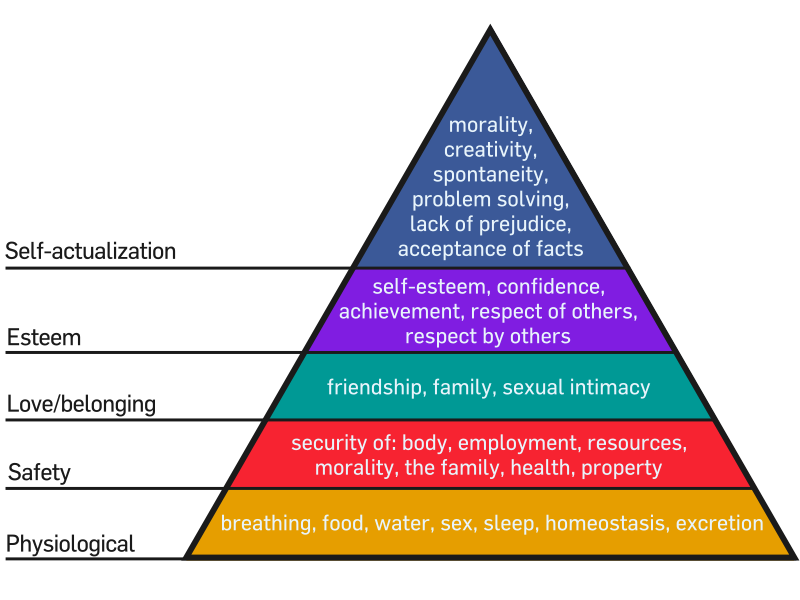
Abraham Maslow was an American professor of psychology who proposed this theory in his 1943 paper, "A Theory of Human Motivation." His theory of human developmental psychology is centered around the particular stages of growth in humans. The image below is a representation of Maslow's pyramid:

Maslow breaks up the groups in critical importance with basic, instinctive needs on the bottom like food and shelter and self-actualization at the top. Once you are self-actualized, Maslow believed you are metamotivated: striving beyond the scope of fundamentals and trying to attain full potential. 


However, numerous psychologists believe that as humans have evolved, so have our needs. Here is an article that gives Maslow's pyramid a "face-lift" for the current generation:
Rebuilding Maslow's pyramid on an evolutionary foundation

Classical Conditioning

Behaviorism is a theory in psychology that states learning occurs through interactions with the given environment. The environment shapes your behavior and internal mental states do not affect behavior. Classical conditioning is a behavior learning theory that was discovered by Russian psychologist, Ivan Pavlov. An environmental stimulus and a natural stimulus are used in this learning process to determine what happens when outside factors trigger basic instincts.

Pavlov used unconditioned and conditioned stimuli and responses in his famous "Pavlov's dogs" experiments. He noticed that the dogs not only salivated in the presence of meat powder but also salivated in the presence of the lab technician that fed them. Pavlov used a bell to indicate the arrival of food for the dogs in an initial experiment. After a while, the dogs would salivate at the sound of the bell even when there was no food available. 
One of Pavlov's dogs which is now preserved in the Pavlov Museum in Ryazan, Russia

People do not actually behave like Pavlov's dogs. However, classical conditioning has real-world implications has people use them to train pets, in the treatment of phobias and anxieties, and in the teaching of new associations. 

You and the Environment

How does your behavior alter your perspective on the environment and how you act towards it? There is no definite answer, but in the articles Mind the Gap! and Feelings of Responsibility for the Environment, researchers have looked into altruism, empathy, prosocial models and other venues to help determine if there is actually a connection between behavior and the environment. Personally, my adoration for the environment is a mixed bag: I act altruistically because I want to improve the environment for the people around me and their well-being. On the other hand, I love animals and all of nature itself; it would be a sad day in my life to find out that dolphins or tigers have gone extinct. There are different reasons why people would want to become involved with our Glassboro project. On the other hand, there are numerous reasons why people would not want to be a part of this group. What motivates people towards different causes is unique to each person. Whether it is for altruistic reasons or because involvement will be directly beneficial, people are motivated towards causes in dissimilar manners because, in essence, we're all special in our own ways!

So how do you act towards the environment? Do you do anything specific to preserve it on a large of small-scale?

Sources:

Saturday, September 10, 2011

Personality Research

In our Environmental Studies: Social Perspectives class, Professor Rob Fergus asked us to take a series of personality tests. "To know about others, you must first know yourself," he reasoned to us. Makes sense. After taking a Meyers-Briggs Test and a Big Five test, I found myself saying, "Wow, that's completely me" quite often when reading my results. Here is what I discovered about myself:


Meyers-Briggs
Extraverted- 56% 
Intuitive- 62%
Feeling- 25%
Judging- 56%
ENFJ (Teacher)


Big Five
Extroversion- 66%
Orderliness- 68%
Emotional Stability- 66%
Accommodation- 70%
Inquisitiveness- 70%


The following article shows the reader the qualities of a Teacher in the Kiersey Scale. The Temperament of an Idealist, a Teacher has the natural ability to lead and bring the best out of those around them. They consider people most important, communicate well, and love being involved. Being organized, extremely tolerant, and sensitive are other features of Teachers.
ENFJ Profile

The following links are to the specific tests I took:
Meyers-Briggs Test
Big Five Test

The article "Where is the Person in Personality Research" states that we must have the personality literature to be able to portray a person in an adequate manner or else we may be looking in the wrong place. Lastly, those who conduct these tests must be able to invest themselves in the task of discovering different personality types. Only then will we be able to accurately describe the unique individuals we encounter.


Environmental Impact
Why is this important for Environmental Studies? It doesn't seem very obvious, but your personality type determines what role you take in the environmental playing field. Those who are more extroverted will be up for going to rallies and meetings to save the environment while more introverted people may feel that recycling is the most they would do for the environment. Personality research is astounding; to know the inner workings of how your mind works is a fantastic asset as you go forward in your attempts to make our planet a little greener. Keep in mind that not everyone you encounter will be just like you and embrace it! We can save the world in so many different ways: big and small! In relation to our Glassboro project, we will be able to see how people react to environmental activism from a group of college students. Appealing to different personality types with unique forms of participation will get more people involved.


More information on personality research:
Personality Research at UM
Carl Jung's Personality Types
The Big Five Personality Dimensions
Behavior Genetics

Similar Minds: Personality Research blog